

An unexpected benefit of overseeing the online accounts of a person who doesn’t exist is it sharpens your spam-spotting skills. I’m fairly good at sussing out phishing scams and the like, but the task became easier once Rosemarie and I created Renee Patrick. It’s impossible to fall for bogus bills or receipts when the recipient doesn’t possess credit cards. Idle threats to expose Renee’s alleged porn-watching history unless a crypto ransom is paid are, naturally, met with scorn.1
Some of the emails are legit. Renee recently received one from Facebook stating that her account was suspended for potentially violating the platform’s terms of service. Apparently, there was a question as to whether “Renee Patrick” was a real person. Score one for the algorithm. If we did not provide proof of life within three days, she would be permanently banished. Ten years of book promotion and occasional posts about costume design, vaporized.
My first reaction: Go ahead. Good riddance. Nuke the entire site from orbit. It’s the only way to be sure.2
Cooler heads prevailed. We did the necessary dance in front of the camera—literally—to save the account. Still, that we considered abandoning it is telling.
A few weeks later, someone tried to hack my Facebook account. I don’t know why the guy bothered; I’d have sent him the password if he’d asked. I may be experiencing what Kyle Chayka described in the New Yorker as “posting ennui” as we approach “a point at which normal people—the unprofessionalized, uncommodified, unrefined masses—stop sharing things on social media as they tire of the noise, the friction, and the exposure.”
Or maybe the universe is encouraging me to break up with Facebook. My animus toward the site has led me to keep it at arm’s length. I’ve never installed the app on my phone, which essentially renders the Messenger function useless; if you email me at Facebook, there’s a better-than-average chance I’ll never see it. It turns out avoiding the Facebook app is a smart move. News of other Meta shenanigans, like the prospect of the company accessing photographs you haven’t shared to train its AI, aren’t exactly winning me over.
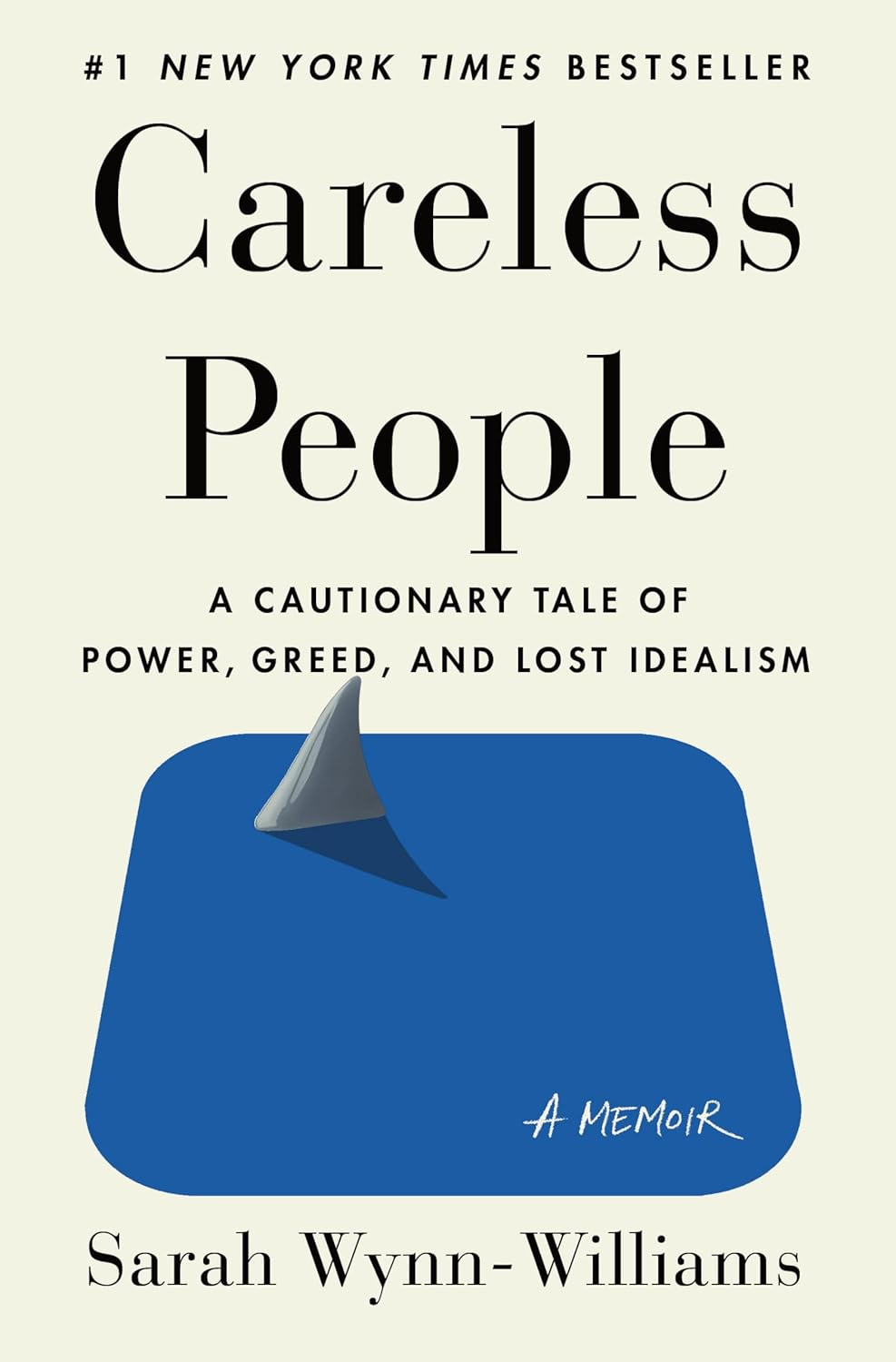
Earlier this year I read Sarah Wynn-Williams’ Facebook exposé Careless People: A Cautionary Tale of Power, Greed, and Lost Idealism (2025), and my experiences with the company have kept its bombshell revelations on my mind. Wynn-Williams served as global policy director at Facebook, excited to develop “one of the world’s all-time great political tools” as a force for good. But the insular culture forged by Mark Zuckerberg, described by Wynn-Williams as “cheerful recklessness combined with passivity … forward motion without introspection,” ensured a race to the bottom. Within Meta, Wynn-Williams writes:
It’s us against the outsiders and haters, whether that’s the media, academics, or other companies. It’s us versus them. And as with nationalism, there’s something cleansing in this narrative pushed from the top, something comforting about being in the right, an organized innocence.
That innocence may be all that is organized at Meta. Wynn-Williams quickly discovers that “there is no grand ideology here. No theory about what Facebook should be in the world.” It’s about growth and nothing else. The book is a procession of jaw-droppers. Like Meta’s indifference to the arrest of an employee abroad on company business and to its culpability in a massacre against the Rohingya people of Myanmar in 2017. Or its rush to establish a presence in China resulting in a collaboration with the Chinese Communist Party so intimate that its own data centers would become a target of US intelligence agencies, with this viewed internally as “a given of doing business, rather than a serious red flag that you’re on the wrong path.” Wynn-Williams was critiqued in performance reviews for not being available during maternity leave, despite spending part of that leave in a coma due to a complicated pregnancy. She was terminated after reporting her boss for sexual harassment. As for former COO Sheryl Sandberg’s repeated requests for her assistants and colleagues to take naps with her, I’ll let HR field that one.3

One story from Careless People that received a lot of ink was Mark Zuckerberg arriving at an airport for a trip abroad without his passport and suggesting that someone from the company simply ask the president of Peru to wave him into the country like a bouncer working a nightclub door. Wynn-Williams writes, “Max Weber said that dealing with unintended consequences of your actions is what political responsibility is. This guy can’t even take responsibility for leaving his passport at home, let alone influencing the US election.” The story became even more galling after I saw Paddington in Peru (2025). It’s the intrepid little bear who understands the obligations of possessing a passport, and he’s travelling to Peru to visit his ailing Aunt Lucy, not put a stranglehold on the country’s internet. We could all stand to be more like Paddington, but Zuck strikes me as the one person who could watch the stone masterpiece that is Paddington 2 (2018) and root for Phoenix Buchanan.4
Why am I still on Facebook? It’s the best way to keep in touch with certain people, and to support several businesses that rely on it now that advertising has collapsed. But I’m rarely there. As for other platforms, time again for a review.
Twitter. I quit six months ago during Uncle Elon’s DOGE shitshow. I log in to my account once a month, purely because I believe in internet squatter’s rights.
TikTok. Don’t have it. Don’t want it.
Threads. Nope.
Instagram. I’m more likely to post a story than a photo, because I can’t be bothered to curate anything.
Bluesky. It continues to have the vibe of a party that people regret coming to, everyone eyeing the door and wondering if they can grab their coat unnoticed. But it’s the place where I toss out dumb jokes and idle observations that don’t warrant being expanded into full posts.5
Notes. Seriously, WTF is Notes? Does anybody like it?
I’ve conducted experiments, posting the same material on Bluesky, Facebook, and Notes. As much as I loathe Facebook, engagement there is the highest by far, while the numbers on Bluesky and Notes make me wonder why I bother.
Leaving me with Substack. Which, like every platform, has its share of problems, many of them political and self-inflicted. I’ve spent enough time on the periphery of the tech industry to know you’re going to encounter libertarian leanings wherever you go. Using the free version of the service and not putting a penny in Big Substack’s pocket works for me, at least for the moment. With the company “warming up to the advertising business,” we may be further along the enshittification curve than previously thought.
Devon Price’s post on avoiding online burnout contained some worthwhile advice. Only post when you want to, you don’t have to engage when you do, and treat it all as a form of play.
What (Else) I’m Reading
I’ve read Gabriel Kahane’s love letter to arts listings in The Atlantic twice now. He makes a powerful, persuasive case for these listings as necessary to a vibrant culture. Buying a copy of Time Out used to be the first thing we did when visiting New York, and doing so steered us to shows and artists we never would have discovered otherwise. Thanks to Ethan Iverson for providing the link. Ethan weighs in with his own thoughts, as does the estimable Vinnie Sperrazza, who, it must be said, namechecks me alongside some sterling people.
While Renee does not watch pornography, she might have appeared in it, in the spirit of adventure during her younger days abroad. Under a pseudonym, of course, the rumors never to be confirmed or even acknowledged. She eventually assumed directorial control of the project, the resulting film still occasionally screened in European festivals as a striking example of the female gaze. Theoretically.
With that quote and the title of this edition, I’m really leaning into my Gen X bona fides.
A fascinating contrast is the tech girlboss clearly inspired by Sandberg in Jacob Kerr’s Silicon Valley thriller Dead Money (2025).
Speaking of movies, I was prepared to rant about how in Careless People Zuckerberg doesn’t get references to Citizen Kane (1941) and Sweet Smell of Success (1957). Then I saw a video in which multiple well-known actors admit they’ve never seen Casablanca (1942) and I decided that we’re doomed. I’ll just add mounting cultural illiteracy to social media’s litany of crimes in The Hague.
Like this one: The reboots of Hollywood Squares and Match Game are unwatchable because talent coordinators insist on telling contestants, “Be animated!” Why? There are celebrities here. Let the professionals handle it. You think the original Match Game encouraged some systems analyst from Oxnard to play to the camera? They had Charles Nelson Reilly for that.
“The story became even more galling after I saw Paddington in Peru (2025). It’s the intrepid little bear who understands the obligations of possessing a passport, and he’s travelling to Peru to visit his ailing Aunt Lucy, not put a stranglehold on the country’s internet.” Amazing writing, thanks Vince
Is it weird that I kinda miss your Blogspot blog?